
Think about the program’s international recognition, tuition costs, scholarship opportunities, and living expenses in the country of your choice before applying to international universities. To prevent delays, go over the requirements for admission, additionally, language proficiency exams, and visa procedures. Examine the university’s standing, graduate results, and student assistance programs. To guarantee a seamless transition, assess housing options, higher education, campus amenities, and cultural surroundings. Knowing these important aspects enables you to make an informed choice and select the best school for your future.
Understanding Higher Education Requirements in Global Universities
Pakistani Education System | Study Abroad | Study Abroad Consultants
Higher education has a significant impact on future employment, knowledge expansion, additionally, and access to international opportunities. An increasing number of Pakistani students are selecting international universities to fulfil their academic and career aspirations as the world becomes more interconnected. Understanding the admission requirements of international higher education institutions is essential for a successful application process, regardless of whether one is pursuing undergraduate, additionally, graduate, or doctoral programs. This comprehensive guide examines the idea of higher education, the organisation of Pakistan’s higher education system, additionally, the prerequisites for studying overseas, additionally, and the scholarship opportunities that are available. It also emphasises the value of education consulting services and study abroad consultants.
What is Higher Education?
Higher education is defined as advanced instruction provided by colleges, universities, additionally, and other recognised establishments that award professional credentials or academic degrees. It encompasses many different academic pathways, such as:
- Bachelor’s degree programs for undergraduates
- Postgraduate courses (Master’s degrees)
- PhD programs, or doctoral studies
- Specialised certifications and professional degrees
Beyond classroom instruction, higher education serves other purposes. It emphasises the growth of critical thinking, research skills, practical abilities, and general intellectual and personal development. Stronger career prospects, exposure to the world, and chances for cutting-edge research are all made possible by higher education. Pursuing higher education abroad allows Pakistani students to experience a variety of cultures, receive top-notch academic instruction, and develop a competitive professional profile that makes them stand out globally.
Overview of the Pakistani Education System
Students in Pakistan are guided from basic education to advanced studies through some academic levels. Among them are:
- Elementary and Secondary Schooling
- Intermediate Higher Secondary Education
- Higher Education or Tertiary (University Level)
The Higher Education Commission (HEC) and the Ministry of Higher Education are in charge of overseeing higher education in Pakistan. These regulatory organisations establish academic standards, grant university accreditation, keep an eye on quality, and guarantee that degree programs satisfy both domestic and global standards.
Challenges in Pakistan’s Higher Education Sector
Even though there are numerous respectable public and private universities in Pakistan, the higher education sector still faces several challenges, including:
- Inadequate and antiquated research infrastructure
- fierce competition for admission to prestigious universities
- Lack of specialised or advanced academic programs
- Inadequate exposure and cooperation abroad
- Limited options for financial aid and scholarships
- Outdated curricula in some academic domains
Due to these difficulties, a large number of Pakistani students look into international higher education options in order to gain access to top-notch classrooms, contemporary facilities, and improved career pathways.
Higher Education in Pakistan
Numerous academic programs in fields such as engineering, medicine, information technology, business administration, social sciences, and many more are available in Pakistan’s higher education sector. The majority of universities use a semester-based admissions process, Additionally, competitive entrance exams, and merit-based selection.
International universities usually offer some benefits, including the following, even though Pakistani institutions are constantly improving:
- Increased prospects for research
- Current curriculum and in line with industry
- Increased employability and international career opportunities
- Faculty with international qualifications
- Modern labs and facilities
- An academic setting that is multicultural and diverse
Global Higher Education
Pursuing academic studies at universities outside of one’s home country is referred to as global higher education. The UK, USA, Canada, Australia, Germany, Ireland, Turkey, and Malaysia are popular places for Pakistani students to study because of their excellent educational systems.
The following are important aspects of international higher education systems:
- Degree programs taught in English
- Access to cutting-edge research, innovation, and technology
- High rankings for universities worldwide
- Flexible and useful learning frameworks
- Academic and student support-our services
- exposure to professional networks and cultures around the world
For a seamless and fruitful academic journey, students who intend to study abroad must comprehend the admission requirements, eligibility standards, and application procedures of international universities.
Requirements for Higher Education in International Universities
The majority of international universities adhere to comparable eligibility requirements, although each nation and university establishes its own regulations. An outline of the typical prerequisites for undergraduate, graduate, and doctoral programs can be found below.
Undergraduate Requirements
To apply overseas for a bachelor’s degree, students usually need:
- Intermediate (FSC/FA/A-Levels) or a comparable degree
- a minimum score of 50–70%, depending on the nation and program
- Evidence of English language competency, such as the TOEFL, PTE, or IELTS
Additionally, some universities might demand interviews or entrance exams.
Postgraduate Requirements
International universities typically require the following for a master’s degree:
- An accredited bachelor’s degree (16 years of schooling)
- Depending on how competitive the program is, a minimum CGPA of 2.5 to 3.0
- Two or more letters of recommendation
- A Statement of Purpose (SOP) detailing motivation and academic objectives
A CV, or resume or relevant work experience could be additional requirements.
PhD Requirements
Advanced requirements for PhD programs typically consist of:
- A relevant Master’s or MS/MPhil degree
- A solid academic background
- A solid research proposal that is in line with the faculty members’ areas of expertise at the university
- Research papers that have been published (optional but highly preferred)
English Language Requirements
Proof of English proficiency is required by the majority of international universities:
- IELTS (6.0–7.5)
- TOEFL (80–100)
- PTE (50–65)
Pakistani students who have previously received their education in English are eligible for exemptions in certain countries.
Entrance Tests
Some international universities require standardised tests:
- GMAT for courses in business
- GRE for research, science, and engineering
- SAT for admission to undergraduate programs
- Pupils should get ready for these exams well in advance
Visa Requirements
Obtaining a student visa is necessary to study abroad. Typical requirements for a visa include:
- A valid passport
- The university’s letter of admission
- Evidence of funds
- Results of medical tests
- Scholarly publications
- Results of a language test
Study visa consultants assist students in comprehending and preparing the required paperwork for each nation.
Financial Requirements
Candidates must provide proof of their ability to pay for:
- The cost of tuition
- Living costs
- Health insurance
- Travel expenses
Bank statements demonstrating adequate funds for three to twelve months are required in some countries.
Scholarships for International Students
The cost of studying overseas is lessened by scholarships for international students. For undergraduate, graduate, and doctoral programs, numerous international universities provide fully funded, merit-based, and need-based scholarships. These grants make higher education more affordable for worthy students by covering living expenses, tuition, and research costs.
Undergraduate Scholarships
provided to applicants for a bachelor’s degree. These could be:
- Merit-based
- Need-driven
- nation-specific
- Particular to a university
Postgraduate Scholarships
These scholarships support students pursuing master’s degrees. Examples consist of:
- Grants for research
- Scholarships for academic achievement
- Scholarships from the Commonwealth
- Scholarships for Erasmus Mundus
PhD Scholarships
These are fiercely competitive and could consist of:
- Scholarships for fully funded research
- Living expense stipends
- Waivers of tuition fees
- Opportunities funded by supervisors
PhD scholarships are widely available for candidates with strong academic backgrounds because international universities frequently place a high priority on research and innovation.
Role of Study Abroad Consultants and Education Consultancy
It can be difficult to select the best university and comprehend international higher education systems. Study abroad advisors and education consulting firms are essential in this situation.
Services Provided
- Choosing a university based on profile
- Submission of an application
- SOP writing instructions
- preparing a visa application
- Support for scholarships
- Additionally, guidelines for accommodations
- Orientation before departure
Students’ chances of admission and visa approval are increased when they are guided through the entire process by knowledgeable consultants.
Benefits of Higher Education
Higher education provides strong career opportunities, additionally, advanced knowledge, and valuable skills. It improves research skills, critical thinking, additionally, and career advancement. Higher education is a crucial route for long-term success and personal growth because it gives students access to better jobs, exposure to the world, and innovative opportunities.
Career Advancement
Higher education makes it easier for students to advance in their careers because they acquire specialised knowledge, strong professional skills, and industry-relevant expertise. It provides access to leadership positions, better jobs, additionally, and greater pay. Additionally, graduates gain from increased self-assurance, networking possibilities, and long-term professional advancement in international markets.
Skill Development
Students benefit:
- Analytical abilities
- Communication abilities
- Capabilities for leadership
- Research abilities
- A global perspective
Improved Networking
Participating in an international university provides networking opportunities with:
- Professionals in the industry
- International faculty
- Subject matter experts
- networks of alumni
Importance of Higher Education
Both individual growth and societal advancement depend on higher education. It benefits pupils:
- Participate in the development of the country
- Innovate by conducting research
- Obtain prestigious positions
- Create careers abroad
Benefits of Studying Abroad
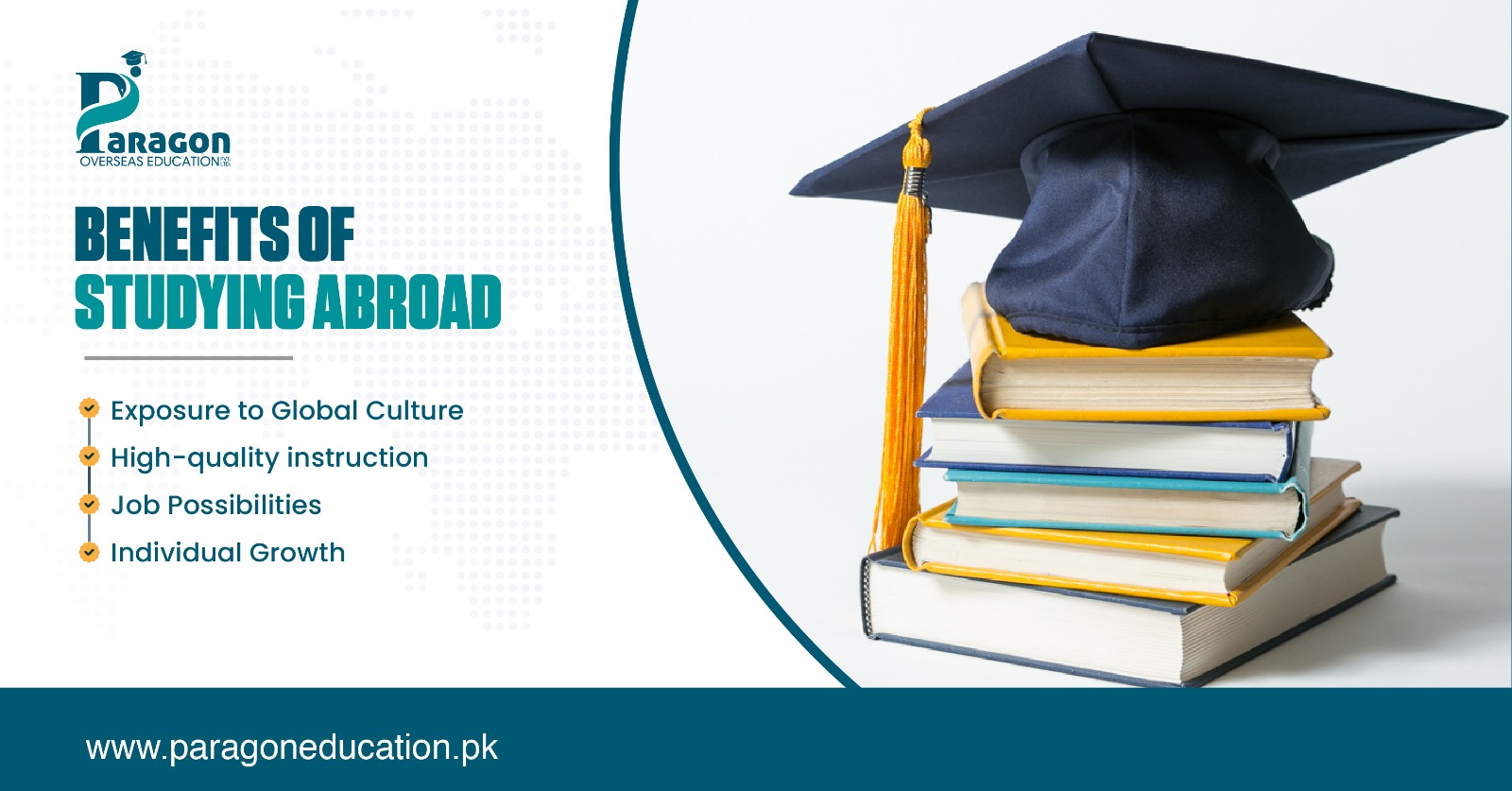
Students can experience the world, receive a top-notch education, additionally, and gain access to cutting-edge learning environments by studying abroad. It fosters self-reliance, cultural awareness, additionally, and effective communication. International degrees open doors to international careers, increase employability, additionally, and offer networking opportunities. In general, studying overseas promotes long-term career success and personal development.
Exposure to Global Culture
Students are better able to comprehend a variety of lifestyles, customs, and viewpoints when they are exposed to global culture. It fosters personal development, additionally prepares them for multicultural settings and international careers, and develops flexibility, open-mindedness, and effective communication skills.
High-quality instruction
International colleges provide:
- Contemporary methods of instruction
- Revised syllabus
- Robust research settings
Job Possibilities
Many nations permit:
- Part-time employment
- Work visas after study
- Routes for obtaining permanent residence
Individual Growth
Students who study overseas become:
- Confident
- Self-sufficient
- Proficient in solving problems
Why International Universities Prefer Pakistani Students
Pakistani pupils are renowned for:
- Solid educational backgrounds
- Proficiency in multiple languages
- Flexibility
- Workplace morals
- Additionally, a desire to conduct research
They are therefore desirable applicants to international universities.
How the Ministry of Higher Education Supports Overseas Studies
HEC and the Ministry of Higher Education offer assistance in the following ways:
- Additionally, academic document verification
- Equivalence of foreign degrees
- Scholarships for merit
- About us, we help students access accredited foreign universities by providing trusted guidance, clear information, and complete support for successful international education.
Recognised international programs are frequently posted on the HEC website to assist students in making well-informed choices.
Understanding Document Requirements
Typical paperwork needed for admission abroad includes:
- A passport
- Transcripts of academic work
- Certificates of degree
- Purpose Statement
- Letters of recommendation
- CV/Resume
- Results of an English test
- Proposal for research (PhD)
- Financial records
A seamless admissions process is ensured by preparing these documents in advance.
Paragon Education: Your Reliable Source for Successful Student Visas to Turkey
At Paragon Education, we provide dependable, step-by-step guidance to help students confidently navigate international study pathways. We break down all the information students need to prepare a successful visa application in our most recent resource, Turkey Student Visa Guide: Requirements, Eligibility, additionally, and Application Steps. At Paragon Education, our mission is to empower students by providing them with accurate information, professional guidance, and committed support that is suited to the needs of global education. Whether you intend to pursue undergraduate or graduate studies, our platform makes sure you have all the information you need to easily study in Turkey.
Conclusion
Deciding to pursue higher education at an international university is a significant decision that calls for thorough preparation, investigation, and comprehension of all admission requirements. Academic credentials, financial preparedness, language ability, and the general suitability of their chosen study location are all factors that students must consider. You can get in touch with us at Paragon Education for individualised support and knowledgeable advice. Our staff assists students at every stage of the study-abroad process. Students can gain admission to prestigious international universities and unlock remarkable opportunities for academic and professional success by planning and making wise choices.
FAQS
Students should research the academic requirements, English proficiency scores, tuition costs, scholarship opportunities, program structure, and visa requirements for the country and university of their choice before applying.
Indeed. IELTS, PTE, or TOEFL scores are required by the majority of international universities as evidence of English proficiency. Depending on the program and institution, different minimum score requirements apply.
Making a financial plan is crucial. Tuition, lodging, travel, health insurance, and living expenses are all things that students need to think about. Scholarships are a common way for universities to lower overall costs. What should I look into before applying to a foreign university?
Do foreign universities demand English language proficiency exams?
When applying overseas, how crucial is financial planning?
